You’ve spent hours sketching, modeling, refining. Yet, when you look at your design—something still feels missing. The idea is there, but it’s not speaking. You see others getting noticed, published, awarded—and you can’t help wondering: What are they doing differently? Maybe you’ve already worked on a few projects—whether for school, clients, or even competitions. You’ve poured your energy, creativity, and countless late nights into them, only to wonder later—why didn’t it stand out more? It’s not that your design was bad. It’s that something in your process, presentation, or clarity didn’t fully connect. That’s the invisible barrier separating good architects from great ones.
Every project you do matters. It’s a step forward—but sometimes it feels like running in place. You know you’re learning, but you don’t feel the growth. You want your projects to stand out, to speak to the jury, to be remembered. Yet too often they end up being “another nice concept.” That uncertainty can be frustrating. You question your direction, your ideas, even your skills. But the truth is—every great designer has been there. The difference is: the ones who progress learn how to analyze, reflect, and improve their process.
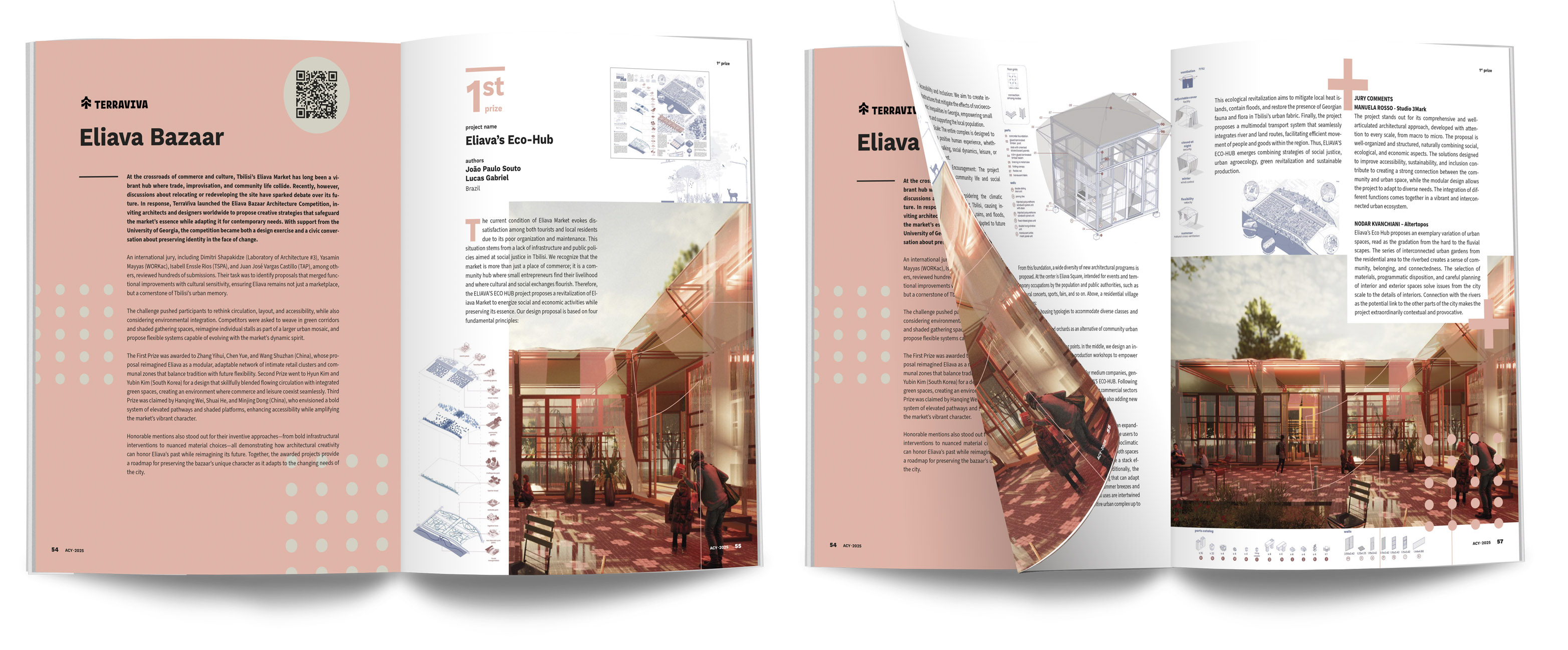
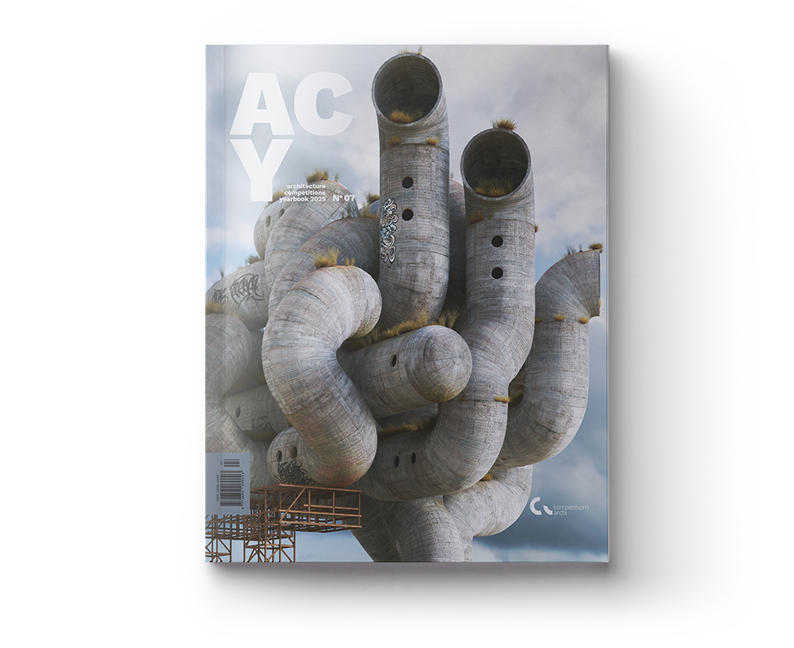
That’s where the Architecture Competitions Yearbook 2025 comes in — a real-world guide that helps you transform the way you design, think, and present architecture. In this newest edition, we go deep into the stories behind awarded projects—uncovering how designers turn abstract ideas into meaningful spaces. You’ll explore 10 of the most inspiring competitions of the past 12 months and 3 exclusive articles from world-renowned architects that reveal how they approach concept, context, and communication.
Each project breakdown walks you step-by-step through the creative process—from the first sketch to the final board—showing how the best architects think, decide, and refine. You’ll discover tips and strategies that will instantly improve the quality and clarity of your own designs. This isn’t just inspiration — it’s a framework for growth.
One of the highlights of the Architecture Competitions Yearbook 2025 is the “How We Won That Competition” section — where winning teams reveal how their ideas evolved into award-winning designs. You’ll uncover the creative thinking, key decisions, and presentation strategies that impressed expert juries and set their projects apart.
These real-world insights give you the tools to strengthen your own work — from building stronger concepts to communicating them with clarity and impact. Every tip, method, and strategy shared in this section can be instantly applied to your own projects, helping you elevate your design process right away. It’s like learning directly from the architects who’ve already succeeded — a goldmine of practical advice to help you design smarter, present better, and take your projects to the next level.


On over 220 pages:
The New "35": Navigating Mid-30s Couple Life in Czechia (2026 Edition)
Roughly 25% of new marriages in the Czech Republic now involve at least one partner who has been married before.
The Czech Republic is a country known for its rich history, stunning architecture, and vibrant culture. But what about love and relationships in this beautiful country? We spoke to 35 new Czech couples from different walks of life to learn about their experiences, traditions, and what makes their relationships special.
Week seven: The last rotation. Marketa was given David again. They sat in the same back row, but this time their shoulders touched. “So,” David said. “What’s your favorite color now?” She looked at him—really looked. “It changed. It’s the blue of your eyes when you’re not tired.” czech couples 35 new
So, what values and priorities do Czech couples aged 35 and new hold dear? Based on various studies and insights, here are a few key aspects:
: The plot frequently revolves around crossing boundaries—convincing a hesitant partner to participate on camera for financial gain. This introduces an element of psychological suspense.
They taught their daughter the language of making. On rainy afternoons the three of them sat at the kitchen table and shaped clay into awkward animals, smoothing edges with practiced patience. The child learned to name colors in the voices of neighborhood vendors and found wonder in the little tools Martin left about like honest treasures. They took turns at bedtime: Jana telling stories about heroic librarians, Martin making up ridiculous ballads about a spoon that saved a kingdom. The house filled with the tactile evidence of a life handcrafted: mismatched mugs, patched sweaters, a crooked bookshelf that bore their names in pencil on the underside. The New "35": Navigating Mid-30s Couple Life in
Interestingly, the importance of "household care skills" in a partner increases for older Czech men but decreases for older women.
1. The "New" Marriage Market: Late Bloomers and Second Chances
Following years of advocacy, the Czech legislative bodies took historic steps to expand the rights of non-traditional couples. According to reporting shared on community forums like Reddit's Europe Community , the Czech Senate approved sweeping new rules designed to grant near-equal rights to same-sex partners, effectively phasing out the older, more restrictive "registered partnership" framework. Key components of these new legal updates include: We spoke to 35 new Czech couples from
To understand the "new," we must look at the old. In 1990, the average age of a first-time bride in the Czech Republic was 21.9 years. Today? It hovers around . For first-time fathers, the average age is crossing the 35-year threshold.
It is not all romantic weekends and financial stability. The "Czech couples 35 new" phenomenon has a shadow side.
Today, major networks producing content under this umbrella operate with strict legal frameworks:
Imagine one year from now—your project doesn’t just look good. It resonates. It tells a story. It stands out. You finally understand what makes a project powerful, and your portfolio reflects that growth. You’re confident, consistent, and recognized for your ideas. That’s the transformation this book was created for. Stop guessing what makes a project win—start learning from those who already do.
Get ready to become a Better Architect!