: Indicates that the target hypervisor environment is Linux KVM / QEMU .

#Fortinet #KVM #Firewall #Networking

:

This paper explores the ontological and technical significance of specific software build identifiers within the domain of cybersecurity infrastructure. By dissecting the exclusive artifact string fgtvm64kvmv721fbuild1254fortinetoutkvmqcow2 , we elucidate the relationship between naming conventions, virtualization architectures, and supply-chain security. We posit that such strings act not merely as file names, but as high-entropy semantic hashes representing a singular, immutable state of a complex system. Through a deconstructive analysis of the string’s components, we examine the implications of the KVM/QEMU virtualization layer, the specificity of patch levels (Build 1254), and the "out" convention in appliance delivery. This paper argues for a framework of "Hyper-Specificity" in forensic analysis, where the exclusivity of a build artifact dictates the precise boundaries of vulnerability assessment and system integrity.

The file format. qcow2 is the standard "Copy on Write" format for QEMU, allowing for thin provisioning and snapshots. Why the "Exclusive" Tag?

Deploying this specialized image natively on an enterprise Linux host (such as RHEL, Ubuntu, or Rocky Linux) requires building a dual-disk topology using standard command-line tools. Step 1: Prepare the Image Storage Directory

Execute the deployment command, ensures accurate CPU pinning, RAM limits, and target interface mapping:

virt-install \ --name=FGT-VM64-v721 \ --description="FortiGate-VM64 KVM Build 1254 Production" \ --os-variant=rhel8.0 \ --ram=4096 \ --vcpus=2 \ --disk path=/var/lib/libvirt/images/fortigate/fortios.qcow2,format=qcow2,bus=virtio \ --disk path=/var/lib/libvirt/images/fortigate/fortilogs.qcow2,format=qcow2,bus=virtio \ --network network=default,model=virtio \ --network bridge=br0,model=virtio \ --graphics none \ --import \ --noautoconsole Use code with caution. 🎛 Post-Boot Network Initialization
Read more

Fgtvm64kvmv721fbuild1254fortinetoutkvmqcow2 Exclusive (BEST • 2026)

: Indicates that the target hypervisor environment is Linux KVM / QEMU .

#Fortinet #KVM #Firewall #Networking

:

This paper explores the ontological and technical significance of specific software build identifiers within the domain of cybersecurity infrastructure. By dissecting the exclusive artifact string fgtvm64kvmv721fbuild1254fortinetoutkvmqcow2 , we elucidate the relationship between naming conventions, virtualization architectures, and supply-chain security. We posit that such strings act not merely as file names, but as high-entropy semantic hashes representing a singular, immutable state of a complex system. Through a deconstructive analysis of the string’s components, we examine the implications of the KVM/QEMU virtualization layer, the specificity of patch levels (Build 1254), and the "out" convention in appliance delivery. This paper argues for a framework of "Hyper-Specificity" in forensic analysis, where the exclusivity of a build artifact dictates the precise boundaries of vulnerability assessment and system integrity.

The file format. qcow2 is the standard "Copy on Write" format for QEMU, allowing for thin provisioning and snapshots. Why the "Exclusive" Tag? fgtvm64kvmv721fbuild1254fortinetoutkvmqcow2 exclusive

Deploying this specialized image natively on an enterprise Linux host (such as RHEL, Ubuntu, or Rocky Linux) requires building a dual-disk topology using standard command-line tools. Step 1: Prepare the Image Storage Directory

Execute the deployment command, ensures accurate CPU pinning, RAM limits, and target interface mapping: : Indicates that the target hypervisor environment is

virt-install \ --name=FGT-VM64-v721 \ --description="FortiGate-VM64 KVM Build 1254 Production" \ --os-variant=rhel8.0 \ --ram=4096 \ --vcpus=2 \ --disk path=/var/lib/libvirt/images/fortigate/fortios.qcow2,format=qcow2,bus=virtio \ --disk path=/var/lib/libvirt/images/fortigate/fortilogs.qcow2,format=qcow2,bus=virtio \ --network network=default,model=virtio \ --network bridge=br0,model=virtio \ --graphics none \ --import \ --noautoconsole Use code with caution. 🎛 Post-Boot Network Initialization
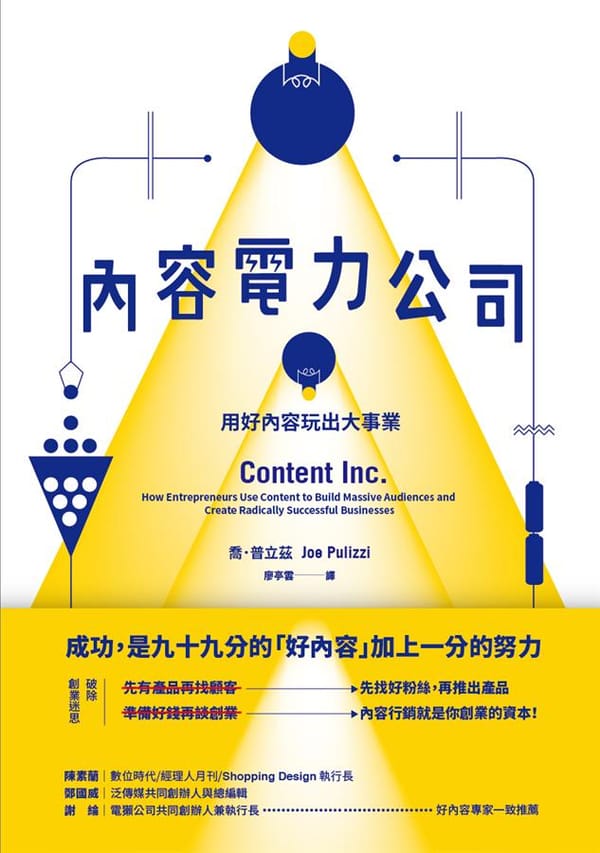
《內容電力公司》實戰讀書筆記 (四):從發電廠到電力網,為你的王國建立真正的護城河

《內容電力公司》實戰讀書筆記 (四):從發電廠到電力網,為你的王國建立真正的護城河

讀完《內容電力公司》前幾章,我們已打造了內容事業的「發電廠」。但一座孤立的電廠無法照亮城市。這篇筆記將深入本書的「電網工程篇」(13-16章),探討如何透過建立直接的「訂閱者」關係,來回應職場上那份因價值觀被踐踏而生的痛苦,並策略性地運用 SEO 與社群媒體,為你的王國建立真正的護城河。

By Kiro