¡@
¡@
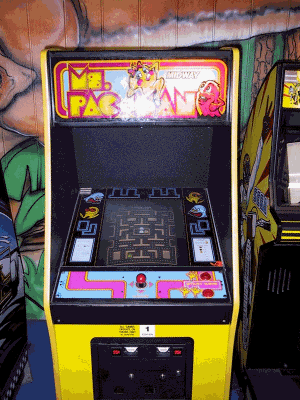
M.A.M.E. ¡]Multiple Arcade Machine Emulator¡^½Æ¦X¦¡¤j«¬¹qª±¼ÒÀÀ¾¹¬O¤@´Ú³]p«D±`§¹µ½ªº¼ÒÀÀ¾¹¡A¥¦¤ä´©¤F³\¦hºØÃþªº¹CÀ¸¡A§K°£ª±®a̪±¬YºØ¹CÀ¸ªºÀÉ®×»Ýn¯S©w¼ÒÀÀ¾¹ªº·Ð´o¡C¨äWindowsª©¥»¤£¶È¾Þ§@²³æ¡A¥\¯à¤]«D±`¦h¼Ë¤Æ¡A¦Ó¥B¨CӤ볣·|±À¥X³\¦h·s¤ä´©ªº¹CÀ¸¡A¦]¦¹¼s¨üª±®aªº³ß·R¡C¦b³o¸Ì©Ò¤¶²Ðªº¹CÀ¸³£¬O¤@¨Ç¦´Á¦b¹C¼Ö³õ©Ò¨ü¨ì¤j®aÅwªïªº¡A¥¦Ì¦³ªº©Î³\¦~¥N¤w¸g¤[»·¡A¦ý¬O¦b·í®É©Ò±aµ¹ª±®a̪º¼Ö½ì«o¬O¥Ã»·µLªk¿i·Àªº¡C¦b¤p®ÉÔ¡A³Ì³ßÅw©Mª¨¶ý¨ì°ª¶¯ªº¤j²Î¦Ê³f¤½¥q³»¼Ó¤W¹Cª±¡A·íµM¥Øªº³£¬O¨º¨Ç¤j«¬¹qª±¡A¨º®Éªº¹qª±¥u¬O³]p¯Âºé®ø»º®É¶¡¡A©Ò¥H³q±`¬O¤£¤Ó»Ýn¥Î¨ì¤j¸£ªº°Ê§@¹CÀ¸¡A¦ý«o³£³Ð·N¤Q¨¬¥B¦³½ì¡A¥un¤@¥´´N¥i¥Hª±«Ü¤[¡C¤£¹³²{¦bªº¤j«¬¹qª±³£¬O¾a¸Ø±iªºµe±©M¼Æ¤£²Mªº¤l¼u±qª±®aªº²ü¥]ÁȨú¸É²ß¶O¡C¦L¶H¤¤¦³¦Wªº¤j«¬¹qª±¦³¤pºëÆF¡B°g»î¨®¡B¯Q¯Y½Ä¾Wºj¡BÂùºIÀs¡BºÆ¨gª¦±èªÌ©M¤p»e¸Áµ¥µ¥¡C³o¸Ì¨S¦³Ô£¢Ù¢Ý¢Ô¢¸¢¸©Î¢±¢¯¢¯¢¯¡B¤]¨S¦³¶V«n¤j¾Ô©Î§Ö¥´±Û·¢Ó¢æ¡A¦³ªº¥u¬O§Úªº....¤]¥i¯à¬O§Aªº¬ü¦n¦^¾Ð¡I
¡@
This comprehensive guide explores the core concepts of Groover's work, its impact on the automation industry, and how you can utilize these foundational principles in the age of smart manufacturing and Industry 4.0. 1. Who is Mikell P. Groover?
He distinguishes robots from simple automation by their flexibility. A bolt-tightening machine that does one thing is "fixed automation." A robot arm that can tighten bolts, weld a seam, and then paint a door—just by changing the program—is an industrial robot.
The end effector is the custom-designed hardware attached to the robot's wrist. Groover divides these into two main categories:
This public link is valid for 7 days and shares a thread, including any personal information you added. This link or copies made by others cannot be deleted. If you share with third parties, their policies apply. Can’t copy the link right now. Try again later. industrial robotics by mikell pgroover pdf
The book covers the transition from shop-floor programming to software-driven simulation, allowing engineers to write and test code on a computer without halting active production lines. Applications in Modern Manufacturing
: High-precision part placement, electronic component insertion, and vision-system quality checks. 6. Economic and Engineering Analysis
"Industrial Robotics" by Mikell P. Groover is a comprehensive textbook that provides an in-depth analysis of the principles, applications, and future directions of industrial robotics. The PDF version of the book offers a convenient and accessible format for readers to explore the world of industrial robotics. As the manufacturing industry continues to evolve, industrial robotics is expected to play a key role in shaping its future. Whether you are a student, researcher, or professional in the field of industrial robotics, Groover's book is an essential resource that provides insights into the exciting and rapidly evolving world of industrial robotics. This comprehensive guide explores the core concepts of
Groover’s text meticulously details the physical and technical components that define an industrial robot.
Industrial robotics is a specialized branch of automation that deals with the design, construction, operation, and application of robots in manufacturing. In his literature, Groover contextualizes robotics as a key component of programmable automation within the broader spectrum of production systems.
Groover organizes robotic applications based on the nature of the work performed: Material Handling and Transfer Groover
: Detailed explorations of robot programming and languages.
A robot arm is useless without a tool at the end of it. Groover explains the engineering behind end effectors (grippers, welding torches, paint sprayers) and how robots interact with their environment using internal sensors (potentiometers, encoders) and external sensors (vision systems, tactile sensors). Robot Programming Languages
First published as part of Groover’s broader work on automation and manufacturing, this text focuses specifically on . It bridges the gap between theoretical kinematics and practical end-of-arm tooling.
¡@
| ^¤å¦WºÙ | ¤¤¤å¦WºÙ | ¦~¥N | ¹CÀ¸¹Ï¤ù¤Î²¤¶ |
| Pac-Man | ¤pºëÆF | 1980 |  |
| Green Beret | ºñ¦â§L¹Î | 1985 | |
| New Rally-X | °g»î¨® | 1981 | |
| Double Dragon | ÂùºIÀs | 1987 | |
| Galaxian | ¤p»e¸Á | 1979 | |
| ¢°¢¸¢³¢² | ¢°¢¸¢³¢² | 1987 | |
| Arkanoid | ¥´¿j¶ô | 1986 | |
| Bomb Jack | ¬µ¼u³Ç§J | 1984 | |
| Senjo no Ookami | ¾Ô³õ¤§¯T | 1985 | |
| Crazy Climber | ºÆ¨gª¦±èªÌ | 1980 | |
| Tenchi wo Kurau | ¤T°ê§Ó | 1989 | |
| Dark Seal | ¶Â·t«Ê¦L | 1990 | |
| Donkey Kong | ¤jª÷è | 1981 | |
| Mag Max | ª÷¿û¦XÅé | 1985 | |
| Final Fight | µóÀY§Ö¥´ | 1989 | |
| Mahjong Gakuen | ³Â³¶¾Ç¶é | 1988 | |
| Argus no Senshi | ¥¼¨Ó¾Ô¤h | 1986 | |
| Makai-Mura | Å]¬É§ø | 1985 | |
| Gemini Wing | Âù¤l¬P | 1987 | |
| Daiku no Gensan | ¤j¤O¤uÀY | 1990 | |
| Hyper Sports | ¬ì®³¦Ì¹B°Ê·|(84¦~ª©) | 1984 | |
| R-Type | R-Type | 1987 | |
| P-47 | P-47 | 1988 | |
| Legend of Kage | ¼v¤l¶Ç»¡ | 1984 | |
| Raiden | ¹p¹q | 1990 | |
| Dragonninja | Às¤§§ÔªÌ | 1988 | |
| Kyukyoku Tiger | Âù²´Ãè³D(¨s·¥ªê) | 1987 | |
| Pastel Gal | ±ÀËJ | 1985 | |
| Bomber Man World | ¬µ¼u¶W¤H | 1992 | |
| Pomping World | Å]°®ð²y | 1989 | |
| Teenage Mutant Ninja Turtles | §ÔªÌÀt | 1990 | |
| Sai Yo Gou Ma Roku | ¦è¹C°Å]¿ý | 1988 | |
| Jigoku Meguri | ¦aº»«_ÀI | 1988 | |
| After Burner | ½Ä¯}¤õºô | 1987 | |
| Space Harrier | ®ÉªÅ¾Ô¤h | 1985 | |
| Nekketsu Kouha Kunio-kun | ¼ö¦åµw¬£ | 1986 | |
| Nekketsu Koukou Dodgeball Bu | ¼ö¦å°ª®Õ | 1987 | |
| Pengo | ¥øÃZ±À¦B | 1982 | |
| Kangaroo | ³U¹« | 1982 | |
| Datsugoku¡GPrisoners of War | ²æº» | 1988 | |
| Street Fighter | §Ö¥´±Û· | 1987 | |
| Kageki | ¤õ¿E | 1988 | |
| Strider Hiryu | ¥XÀ»¸Às | 1989 | |
| Operation Wolf | ¯Q¯÷½Ä¾Wºj | 1987 | |
| Tank Battalion | ©Z§J | 1980 | |
| Bubble Bobble | ªwªwÀs | 1986 | |
| Kuri Kinton | ¥\¨½ª÷¹Î | 1988 | |
| Altered Beast | Ã~¤ý°O | 1988 | |
| Golden Axe | ¾Ô©ò | 1989 | |
| Snow Bros. | ³·¤H¥S§Ì | 1990 | |
| Operation Thunderbolt | ¯Q¯÷½Ä¾Wºj¢± | 1988 | |
| Sangokushi 2 | ¤T°ê§Ó¢± | 1992 | |
| Knights of the Round | ¶ê®àªZ¤h | 1991 | |
| Tokusyu Butai UAG | ¯S®í³¡¶¤ | 1987 | |
| Senjo no Ookami 2 | ¾Ô³õ¤§¯T¢± | 1990 | |
| Ninja Ryukenden | §ÔªÌÀs¼C¶Ç | 1989 | |
| Saigo no Nindou | ³Ì«á§Ô¹D | 1988 | |
| Tank | ¤j©Z§J | 1985 | |
| Tank Force | ©Z§J¤j¾Ô | 1991 | |
| Lost Worlds | ¥@¬É¥½¤é | 1988 | |
| Cadillacs Kyouryuu-Shinseiki | ®£Às·s¥@¬ö | 1993 | |
| Silkworm | Áp¦X§@¾Ô | 1988 | |
| Crime Fighters | µóÀY°«¤h | 1989 | |
| Super Volleyball | ¶W¯Å±Æ²y | 1989 | |
| Shisensho¡GJoshiryo-Hen | ¥|¤t¬Ù¡G¤k¤l¼d½g | 1989 | |
| Area 88 | ¾Ô°Ï¢·¢· | 1989 | |
| U.S. NAVY | ¬ü°ê®üx | 1990 | |
| Phoenix | ªø¥Í³¾ | 1980 | |
| Dragon Breed | ¯«Às¤Ó¤l | 1989 | |
| Great Swordsman | ¦è¬v¼C | 1984 | |
| Bank Panic | »È¦æ¤jµs | 1984 | |
| Moon Patrol | ¯¥¼u¸¨® | 1982 | |
| Moon Cresta | N/A | 1980 | |
| Spartan X | ¦¨Às½ðÀ] | 1984 | |
| Shao-Lin's Road | ¤ÖªL½ðÀ] | 1985 | |
| Tetris (Sega) | «Xù´µ¤è¶ô(SEGAª©) | 1988 | |
| Gradius II - Gofer no Yabou | ¦t©z¨µ¯èÄ¥¢± | 1988 | |
| Michael Jackson's Moonwalker | ¥~¬P¾Ô±N | 1990 | |
| Pac-Mania | ¢²¢Ò¤pºëÆF | 1987 | |
| Super Slams | ÄéÄx°ª¤â | 1995 | |
| Darius | ¤ÓªÅ¾Ô°«¾÷ | 1986 | |
| Street Fighter II¡GThe World Warrior | §Ö¥´±Û·¢± | 1991 | |
| Mat Mania | ºÆ¨gºL¨¤ | 1985 | |
| Mahjong Sister | ³Â³¶©n©f | 1986 | |
| Mahjong Kaguyahime | ®V³Â±N | 1988 | |
| Gals Panic | ¤ÑÅúÅÜ | 1990 | |
| Galaga | ¤j»e¸Á | 1981 | |
| Knuckle Joe | ¥_¤æ¯«®± | 1985 | |
| Dragon Spirit | Às»î | 1987 | |
| Dai Makai-Mura | ¤jÅ]¬É§ø | 1988 | |
| Vigilante | ¥\¤Ò¤p¤l | 1988 | |
| Pocket Gal | ¼²²y | 1987 | |
| Tank Busters | ©Z§J¯}ÃaªÌ | 1985 | |
| Seishun Scandal | «C¬Kª«»y | 1985 | |
| Moon Alien Part 2 | ¤ë²y²§§Î | 1980 | |
| Magic Sword | Å]¼C | 1990 | |
| Black Dragon | ¶ÂÀs | 1987 | |
| Jump Bug | ¸õ¸õ¨® | 1981 | |
| Chase HQ | °lÂÜ¢Ö¢ß | 1988 | |