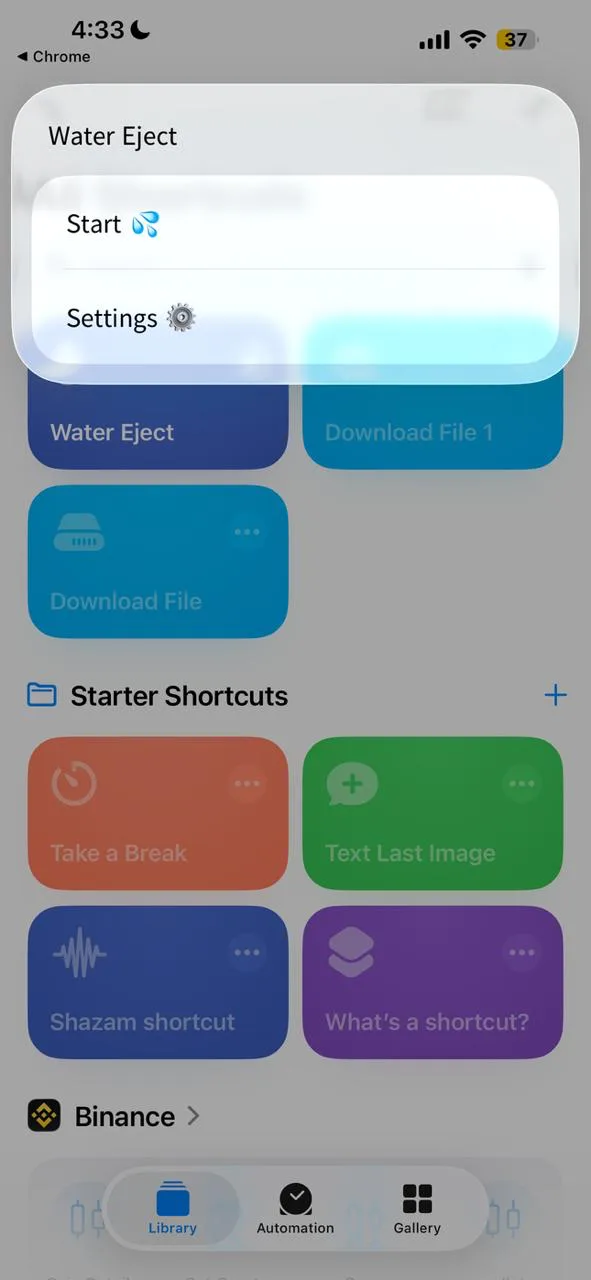
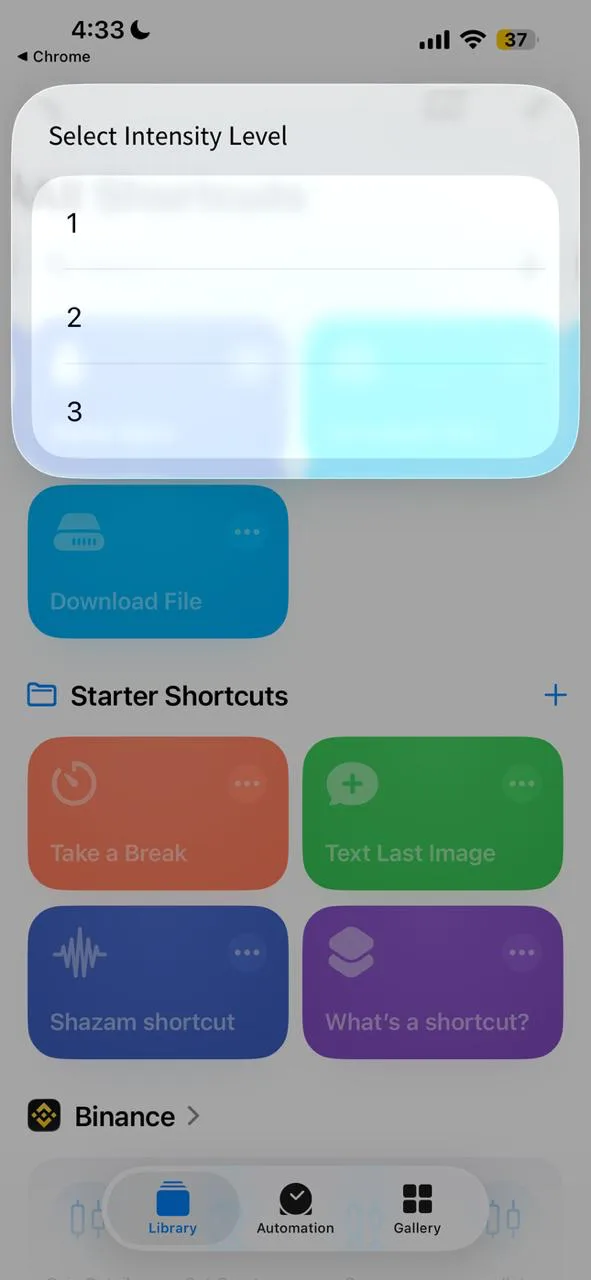
Remove water from your iPhone speaker in seconds. This quick and safe tool helps you expel water from the speaker grill of your iPhone to restore clear audio and protect the functionality of your device.


It is a custom iOS shortcut developed to remove water and dislodge dust from the iPhone and iPad speakers. It works by playing a low-frequency sound that helps push water and dust out of the speakers, helping keep the audio quality intact.
Unlike the Apple Watch, the iPhone does not have a built-in water ejection feature. However, iPhone users can still use this helpful function through a custom-developed tool, called Water Eject Shortcut, that is simple and convenient to use.
Below is a complete step-by-step guide on how to add the Water Eject feature to your iPhone:
Open your iPhone's web browser and download the Water Eject Shortcut from the button.
Tap the link on your iPhone. It will automatically open in the Shortcuts app (pre-installed on iOS, or you can download it for free from the App Store). The Shortcut will be installed instantly on your iPhone.
When the Shortcut page opens, tap the 'Add Shortcut' prompt when it appears.
Open the Shortcuts app, search for Water Eject, and click on it to activate the shortcut or simply say, 'Hey Siri, run Water Eject.'
Finally, tap 'Begin Water Ejection' to start removing water from your iPhone's speakers.
Imagine you're enjoying a coffee or a cold drink while scrolling through your iPhone. Suddenly, your hand slips and liquid spills onto your phone, leaving the speakers wet and sound muffled. Moments like this highlight why having a Water Eject Siri Shortcut on your iPhone can be incredibly useful.
Here's why it is a must-have shortcut for iPhone users:
The shortcut expels water and dust from your iPhone and iPad speakers in a short time. Its low-frequency sound ensures efficient water removal while protecting your device's speaker quality.
Using the shortcut is quick and easy. Simply tap the Shortcut or say, 'Hey Siri, Run Water Eject' and it will start removing water and dust from your iPhone or iPad instantly. There is no complicated setup involved - just a one-tap solution to restore your audio in a few seconds.
Unlike the Apple Watch, which has a built-in water ejection feature, iPhones don't have such an amazing tool. You can not find it in the Shortcuts Gallery; instead, it is custom-developed, especially for iPhone users.
The iPhone Water Eject is completely free to use. You can download it easily through the iCloud link and start using it immediately - no subscriptions, hidden fees, or in-app purchases required.
Dry your phone first using a towel or cloth to remove excess moisture before activating the shortcut.
Run Water Eject multiple times if needed to remove stubborn water or dust particles that may require a second or third run for better results.
Use the Shortcut with Siri by saying, Hey Siri, run Water Eject' for faster and emergency access to the Water Eject feature.
It's recommended to add the shortcut to your phone's Home Screen. For that, click the 3 dots and select 'Add to Home Screen' for quick, one-tap access whenever required urgently.
To clarify all officially verified information, here are the key details of the release:
: In some cases, specific codes are used within software or systems to identify errors or specific conditions. However, without more context, it's unlikely that "440" directly corresponds to a well-known error code in SSIS.
The primary goal of this package is to extract data from [Source System], transform it according to business logic, and load it into the [Target Database] verified for production use. 2. Connection Managers Source: OLE DB/ADO.NET Connection to [Source_Server_Name] ssis440 verified
Whether you choose to pursue the verified file through community-driven peer-to-peer networks or through official, paid digital storefronts, the principle remains the same: Do not settle for less.
You’ve seen the label: SSIS440 Verified . But what does it actually stand for? Depending on your industry — aerospace, manufacturing, or even data systems — this marking can signal everything from material traceability to rigorous process validation. In this post, we’ll break down the two most common interpretations of SSIS440 and explain why “verified” status should never be overlooked. To clarify all officially verified information, here are
To minimize errors like ssis440 and to build a resilient, verifiable ETL framework, consider the following best practices:
Identifiers like "SSIS-440" follow a specific convention common in the Japanese Adult Video (AV) industry. The prefix "SSIS" denotes the production studio—in this case, S1 No. 1 Style—while the number "440" indicates the specific release number within that series. This system functions similarly to ISBNs for books or SKU numbers for retail products. But what does it actually stand for
To achieve and sustain a fully verified status within any digital pipeline, developers and IT architects should employ standard system-hardening methods:
Validates incoming business keys against existing dimension tables.
When a file labeled "SSIS-440 verified" appears on a platform, it signifies that the content has been confirmed to match the catalog entry. This is important for several reasons:
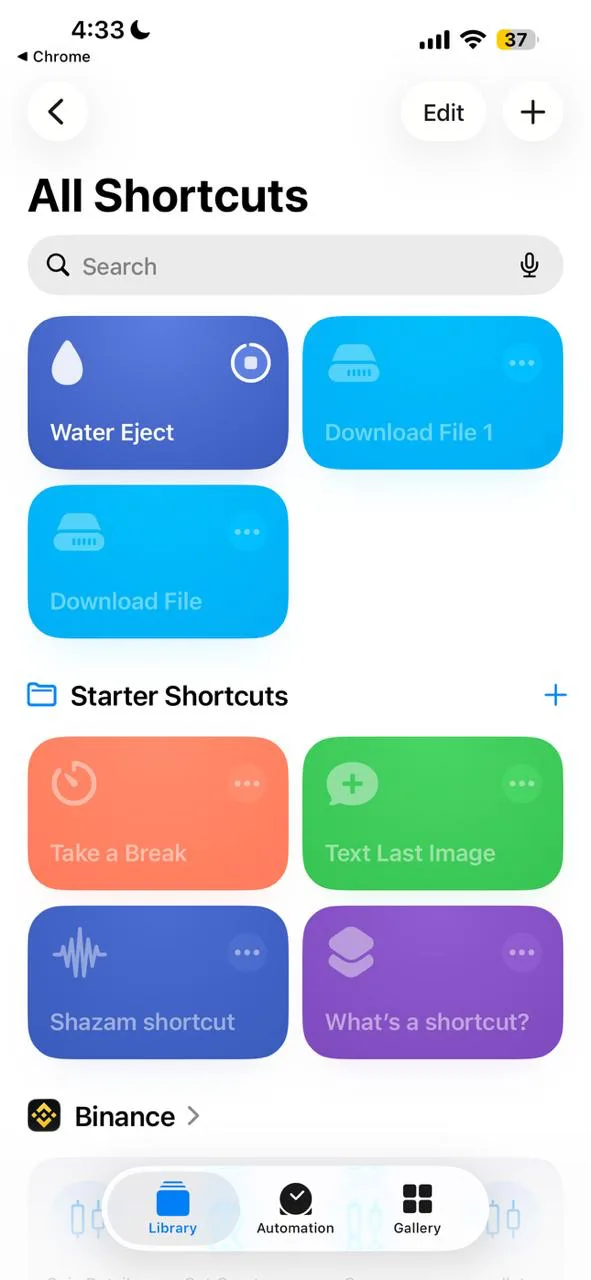
Download the Water Eject Shortcut now. It's free, safe, and takes seconds.
Download Free ShortcutTo clarify all officially verified information, here are the key details of the release:
: In some cases, specific codes are used within software or systems to identify errors or specific conditions. However, without more context, it's unlikely that "440" directly corresponds to a well-known error code in SSIS.
The primary goal of this package is to extract data from [Source System], transform it according to business logic, and load it into the [Target Database] verified for production use. 2. Connection Managers Source: OLE DB/ADO.NET Connection to [Source_Server_Name]
Whether you choose to pursue the verified file through community-driven peer-to-peer networks or through official, paid digital storefronts, the principle remains the same: Do not settle for less.
You’ve seen the label: SSIS440 Verified . But what does it actually stand for? Depending on your industry — aerospace, manufacturing, or even data systems — this marking can signal everything from material traceability to rigorous process validation. In this post, we’ll break down the two most common interpretations of SSIS440 and explain why “verified” status should never be overlooked.
To minimize errors like ssis440 and to build a resilient, verifiable ETL framework, consider the following best practices:
Identifiers like "SSIS-440" follow a specific convention common in the Japanese Adult Video (AV) industry. The prefix "SSIS" denotes the production studio—in this case, S1 No. 1 Style—while the number "440" indicates the specific release number within that series. This system functions similarly to ISBNs for books or SKU numbers for retail products.
To achieve and sustain a fully verified status within any digital pipeline, developers and IT architects should employ standard system-hardening methods:
Validates incoming business keys against existing dimension tables.
When a file labeled "SSIS-440 verified" appears on a platform, it signifies that the content has been confirmed to match the catalog entry. This is important for several reasons: